Full Landscape Redesign for a Classic Brick Farmhouse
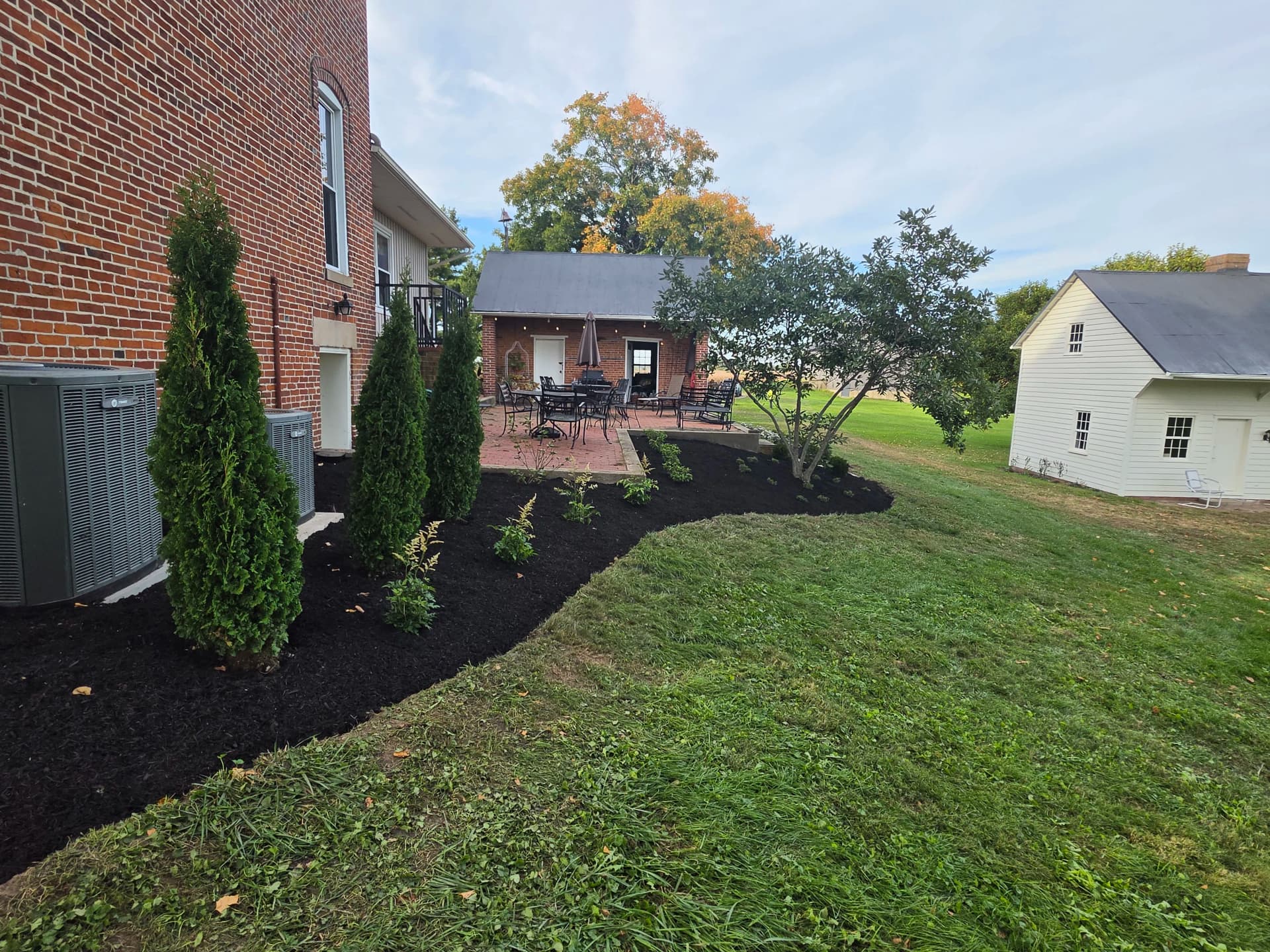
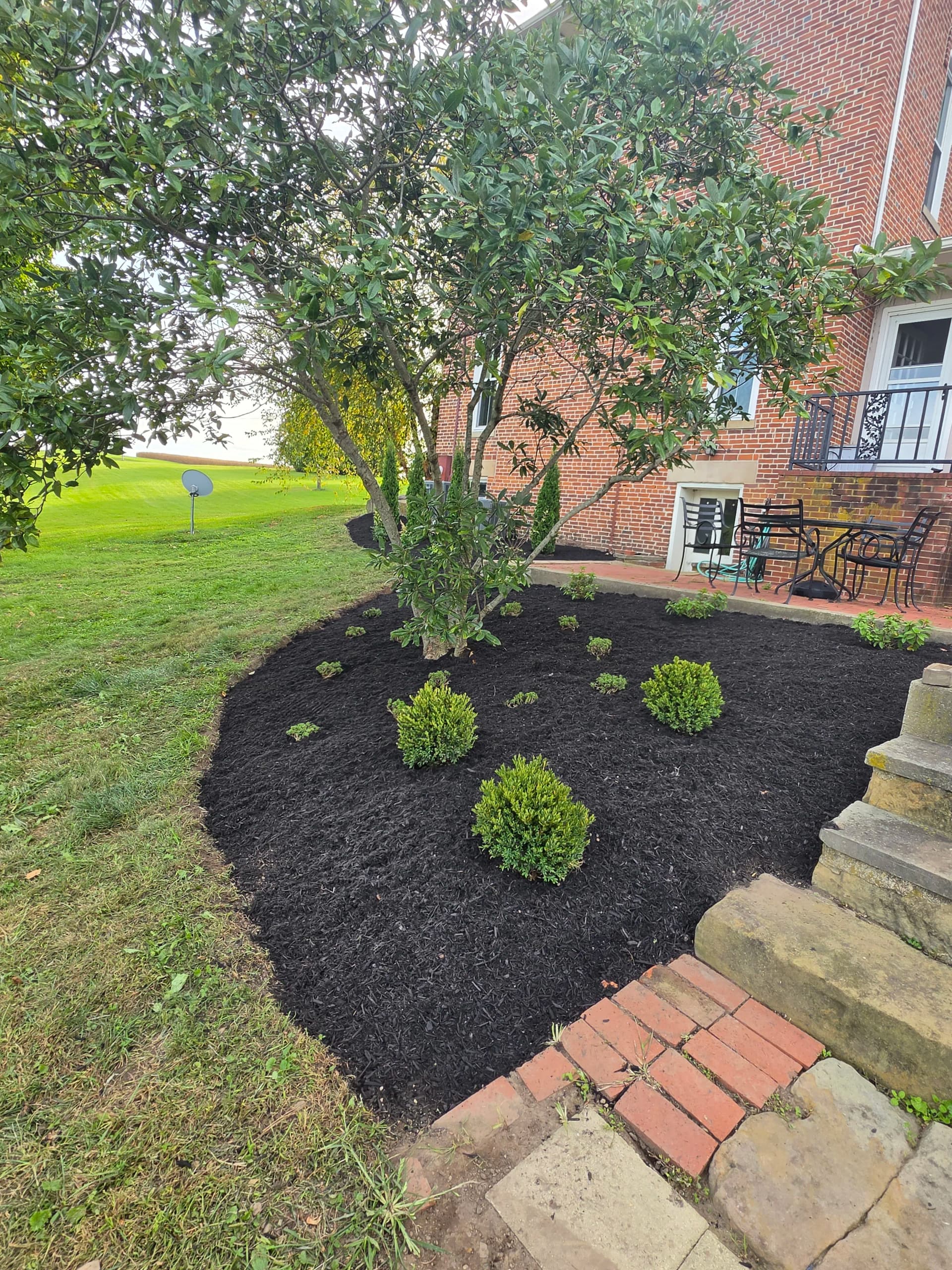
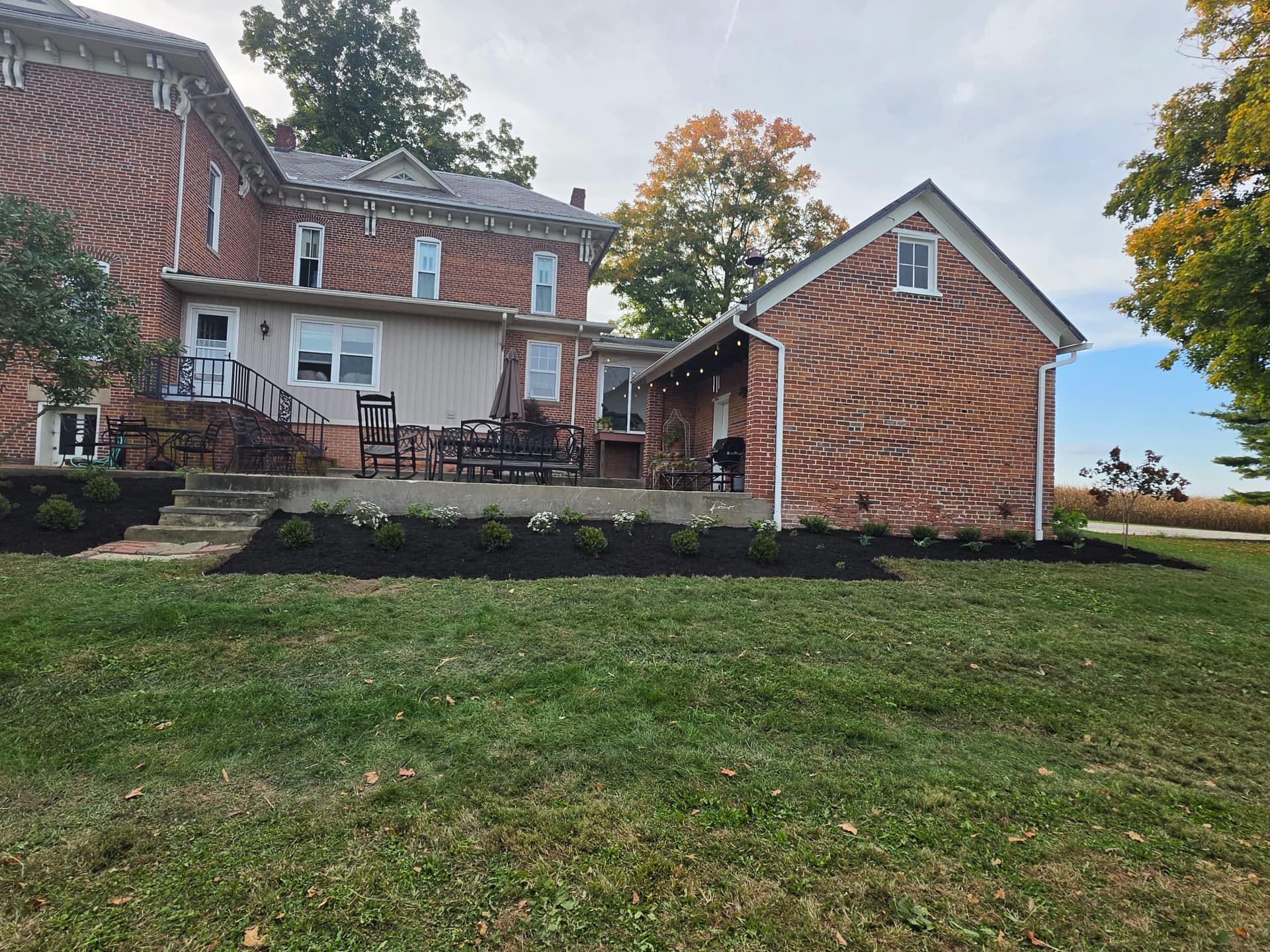
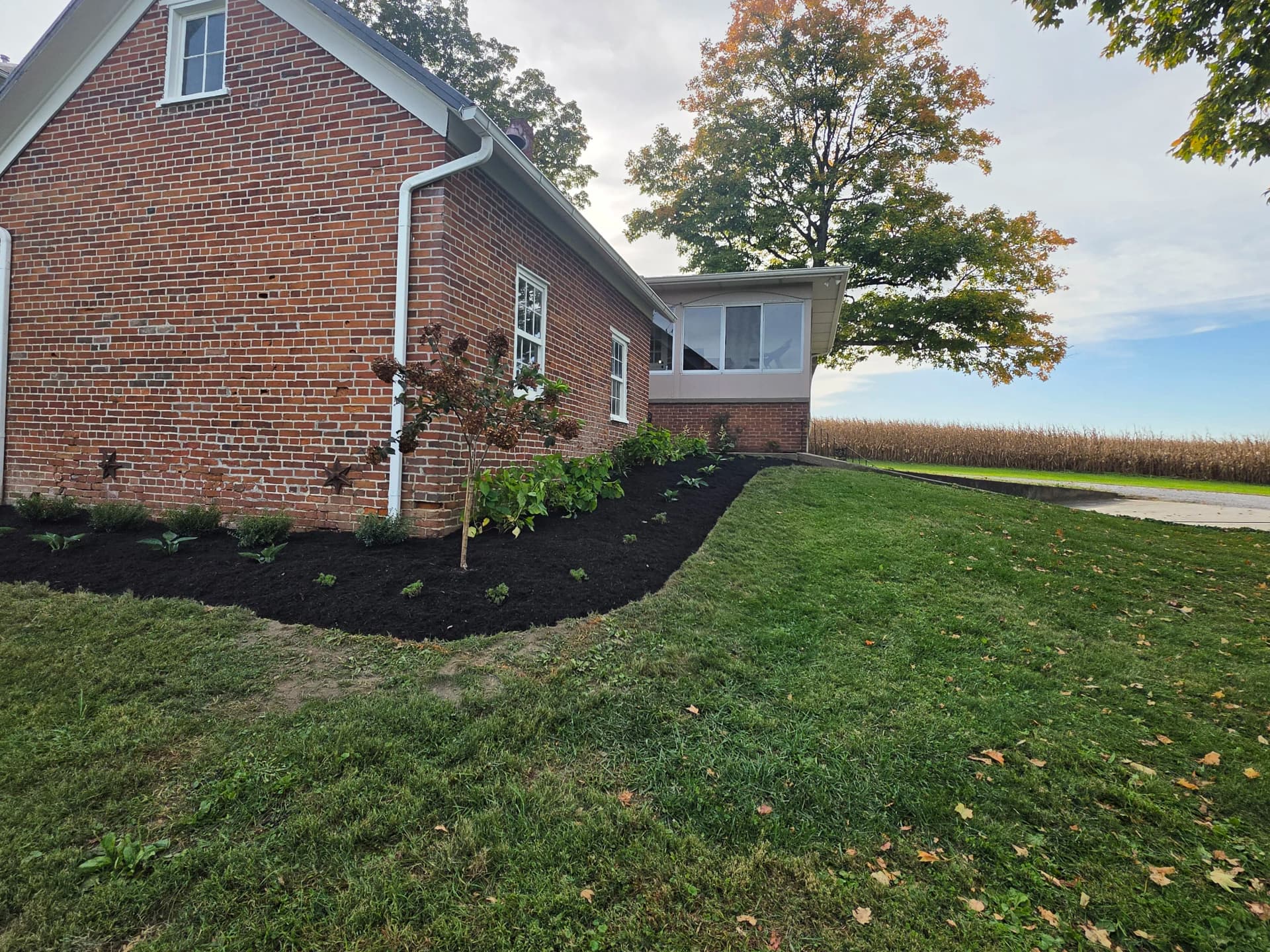
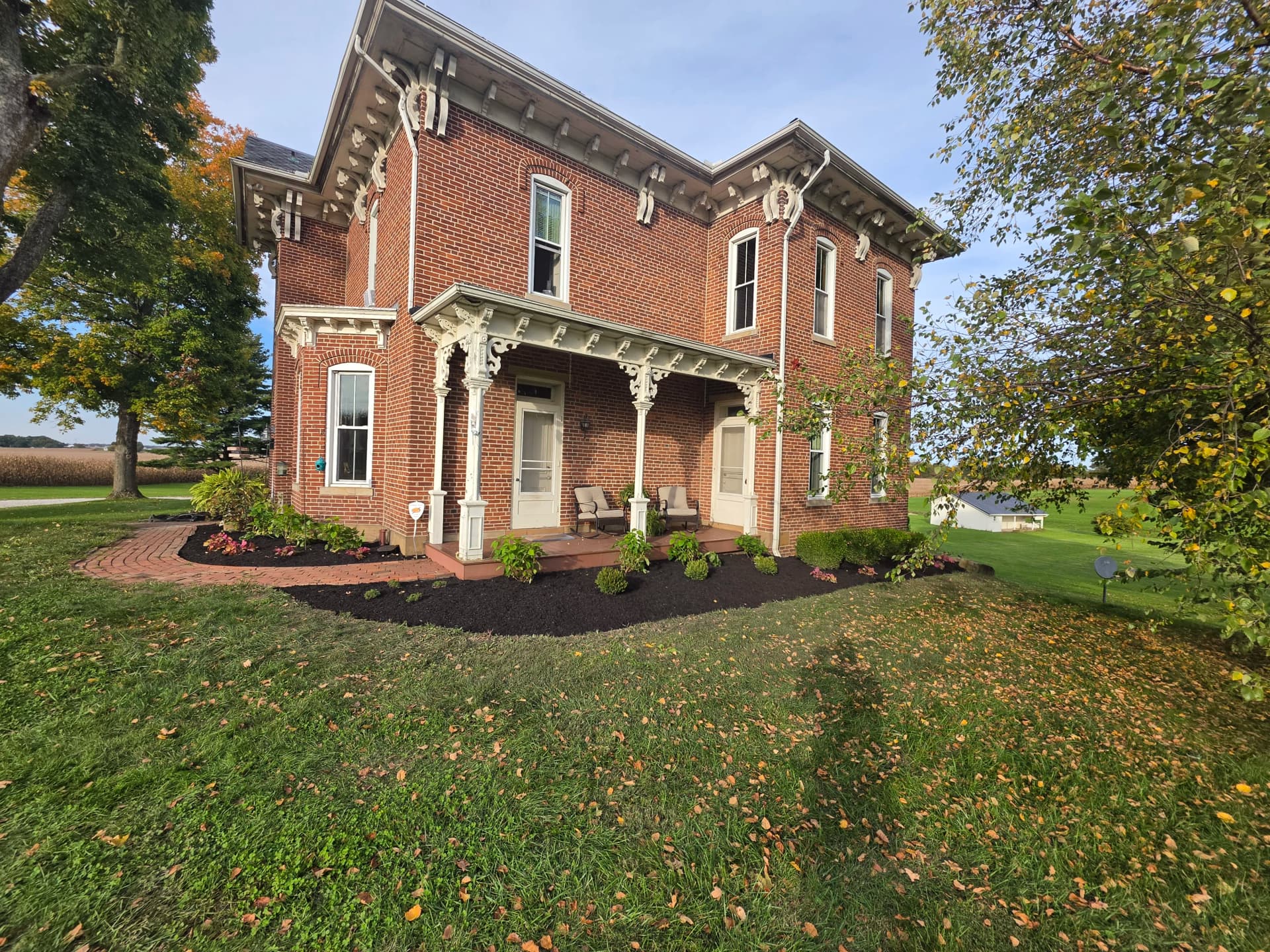
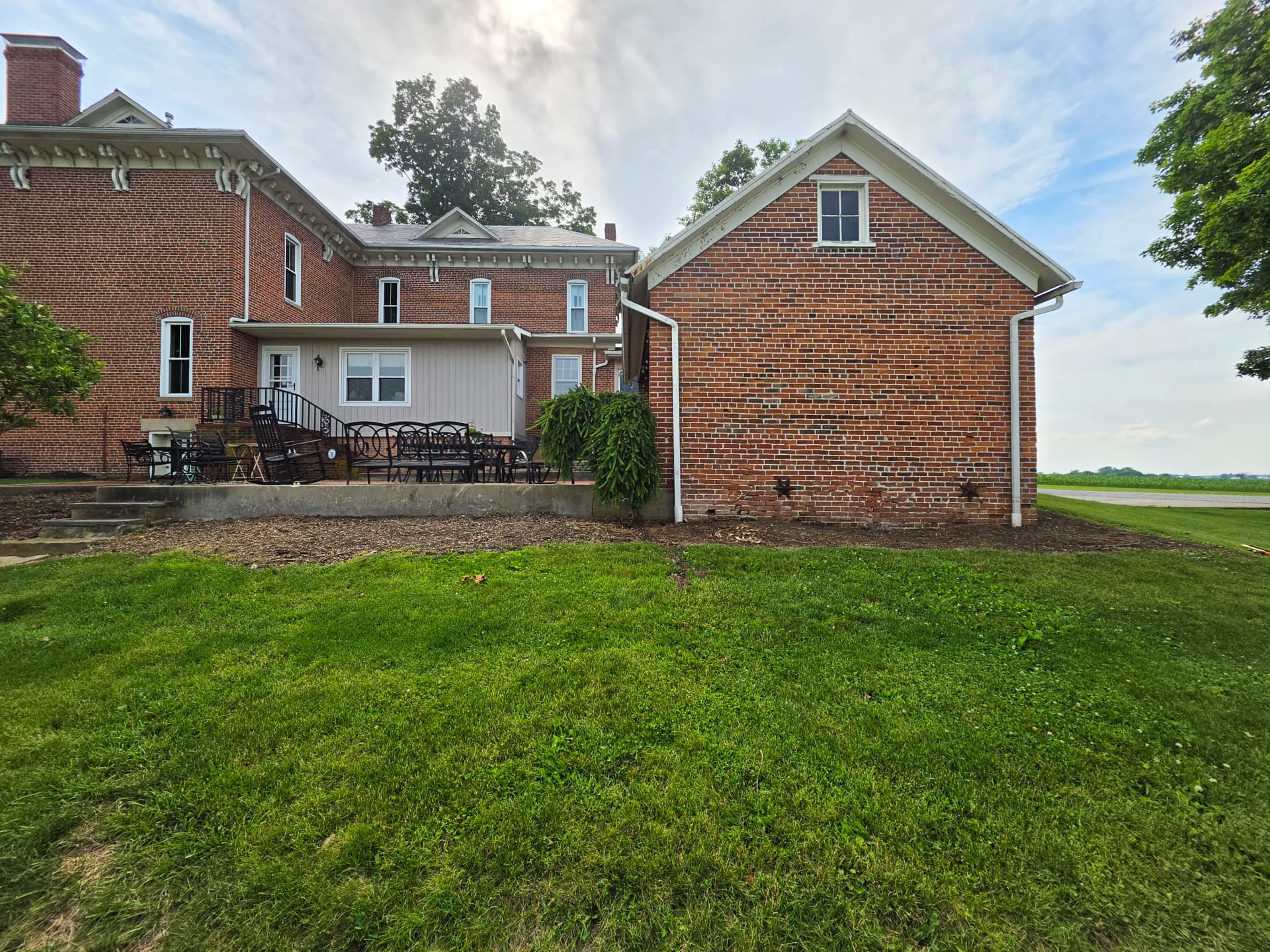
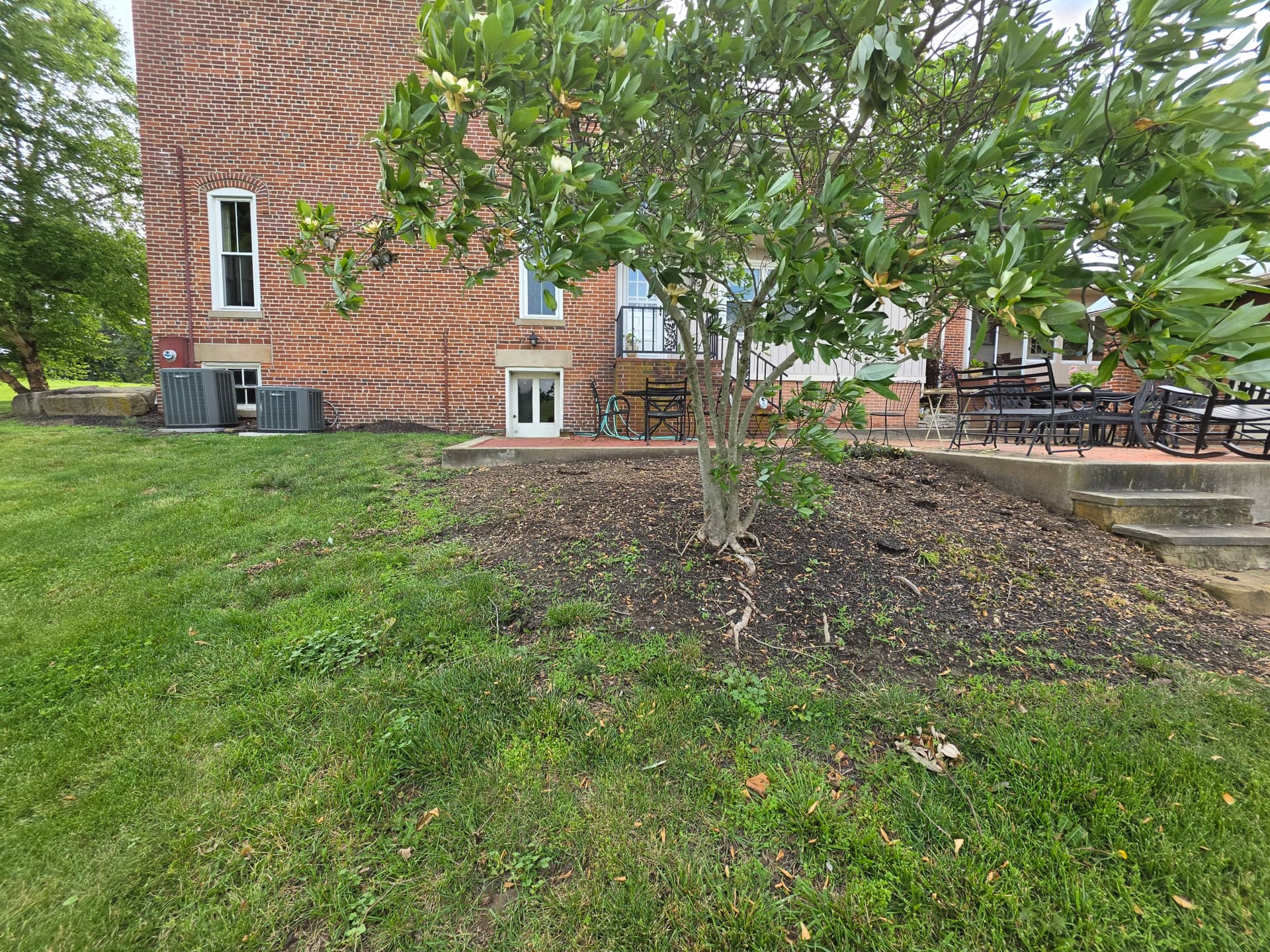
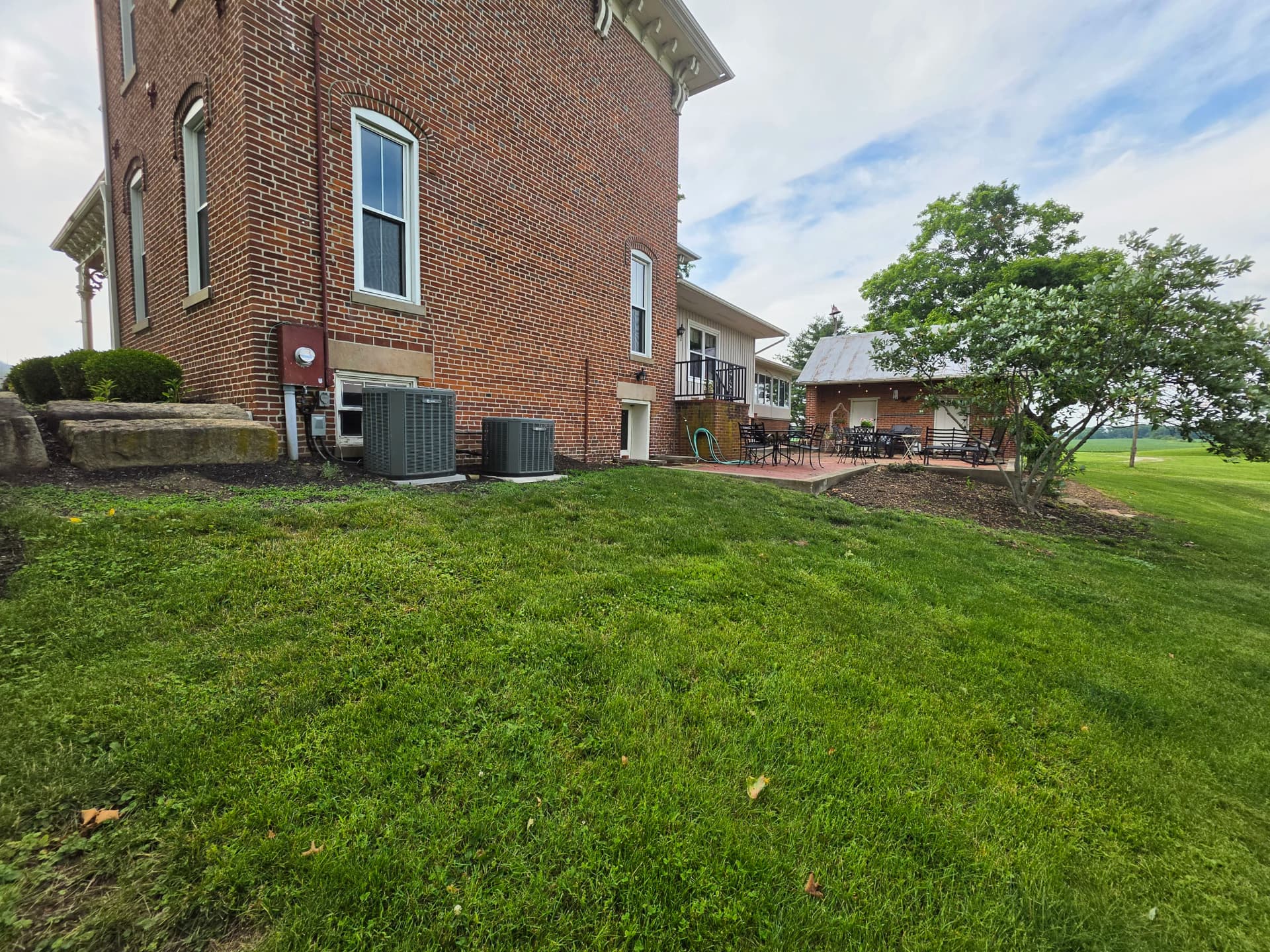
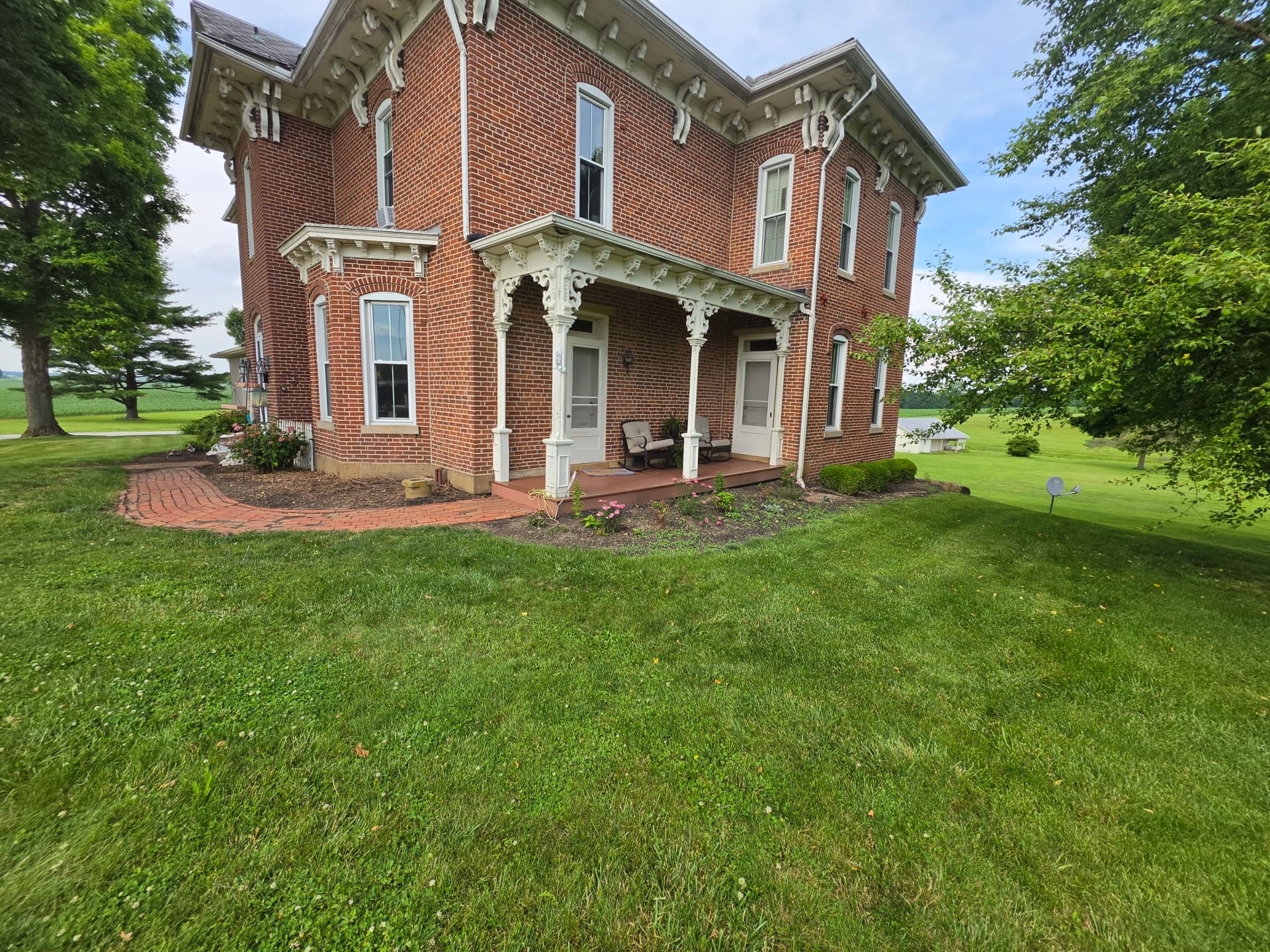
Here's a good example of what a property looks like when it just needs more to work with. This historic brick farmhouse had solid bones - beautiful architecture, great outdoor living space, well-kept lawn - but the landscaping around it was sparse and underdeveloped. Thin beds, little plant material, and dated mulch left the property feeling unfinished.
We started by expanding the bed sizes significantly around the front porch, side of the home, and back patio area. Bigger beds give you more room to layer plants properly - taller shrubs and trees in the back, lower perennials and ground-level plants up front. That layering is what makes a landscape look intentional instead of thrown together.
From there, we brought in a full mix of new plant material. Columnar arborvitaes along the side of the house add vertical structure. Boxwood globes fill in the lower sections and keep things tidy year-round. A variety of perennials and flowering shrubs fill out the beds and give the property color across multiple seasons. We also added a few trees to anchor certain areas of the yard and give the whole property more visual weight.
The black mulch ties it all together. Fresh, dark mulch makes every plant pop and gives the beds a clean, defined edge against the lawn. It also does real work - keeping weeds down and holding moisture in the soil. On a property this size, that matters. Good landscaping services aren't just about looks. They're about building something that's easier to manage long-term.
The difference between the before and after on this one is significant. The front porch bed alone went from a narrow strip with a handful of plants to a full, layered bed that actually matches the scale of the house. That's the thing about residential landscape design - when the plantings match the size of the home, everything just clicks.